Biography, Harlem Renaissance, Harold Jackman

Met Museum and the Harlem Renaissance

Superfine: Tailoring Black Style and the Harlem Renaissance

Bonjour,

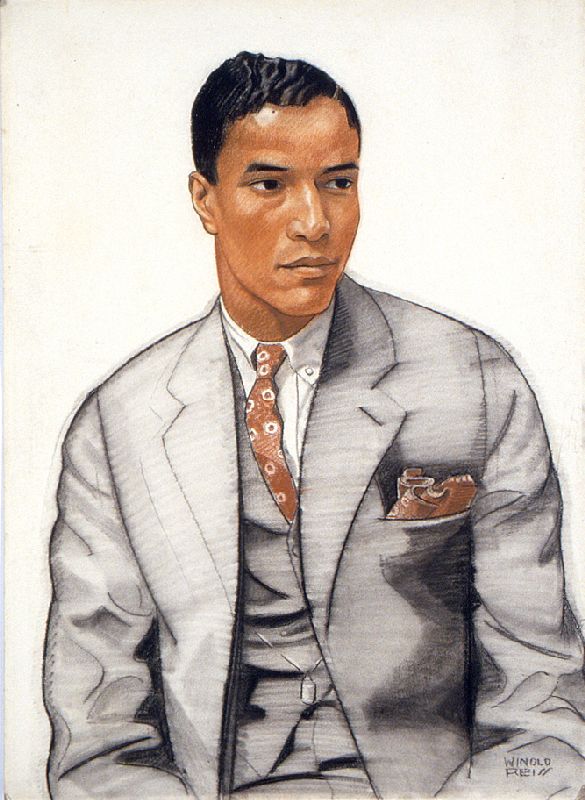
Winold Reiss’ 1924 portrait of Harold Jackman entitled A College Lad was featured in the Metropolitan Musuem’s 2025 exhibit  Superfine: Tailoring Black Style. As Jackman’s biographer, I am unsure if I would classify him as a dandy. The mulatto dandy has been around since slavery. Yet Harold Jackman was not a descendant of slaves. He wasn’t even born in the United States. Too often Jackman has been objectified and deemed shallow because of his physical appearance. I am very happy to see that he was included in the Respectability section of the exhibit. Mr. Jackman was well known for his sense of style. While he didn’t have a lot of money, he managed to look well dressed. Thus it is not surprising that, in addition to being one of the first Black male models, Jackman’s image appears in many works of the Harlem Renaissance.

A College Lad is a portrait of a well educated and well dressed young man. The visible Phi Beta Kappa key signals his academic achievement and his three piece suit emits elegance. The question that has guided my research remains. Why was a biracial man born in England chosen to represent the New Negro? The answer will be found in my biography The Best Man: Harold Jackman and the Harlem Renaissance.
Harold Jackman

Who attended the wedding?

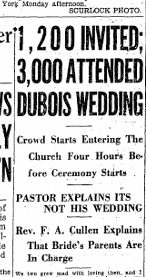
The better question is who didn’t attend the wedding. Countee and Dr. DuBois worked on the guest list for months. 1,200 were invited to the ceremony with a smaller number attended the reception. A problem arose when the entire congregation of Salem Methodist Episcopal Church assumed that they were invited.

The Wedding

April 9, 1929 DuBois Cullen Wedding

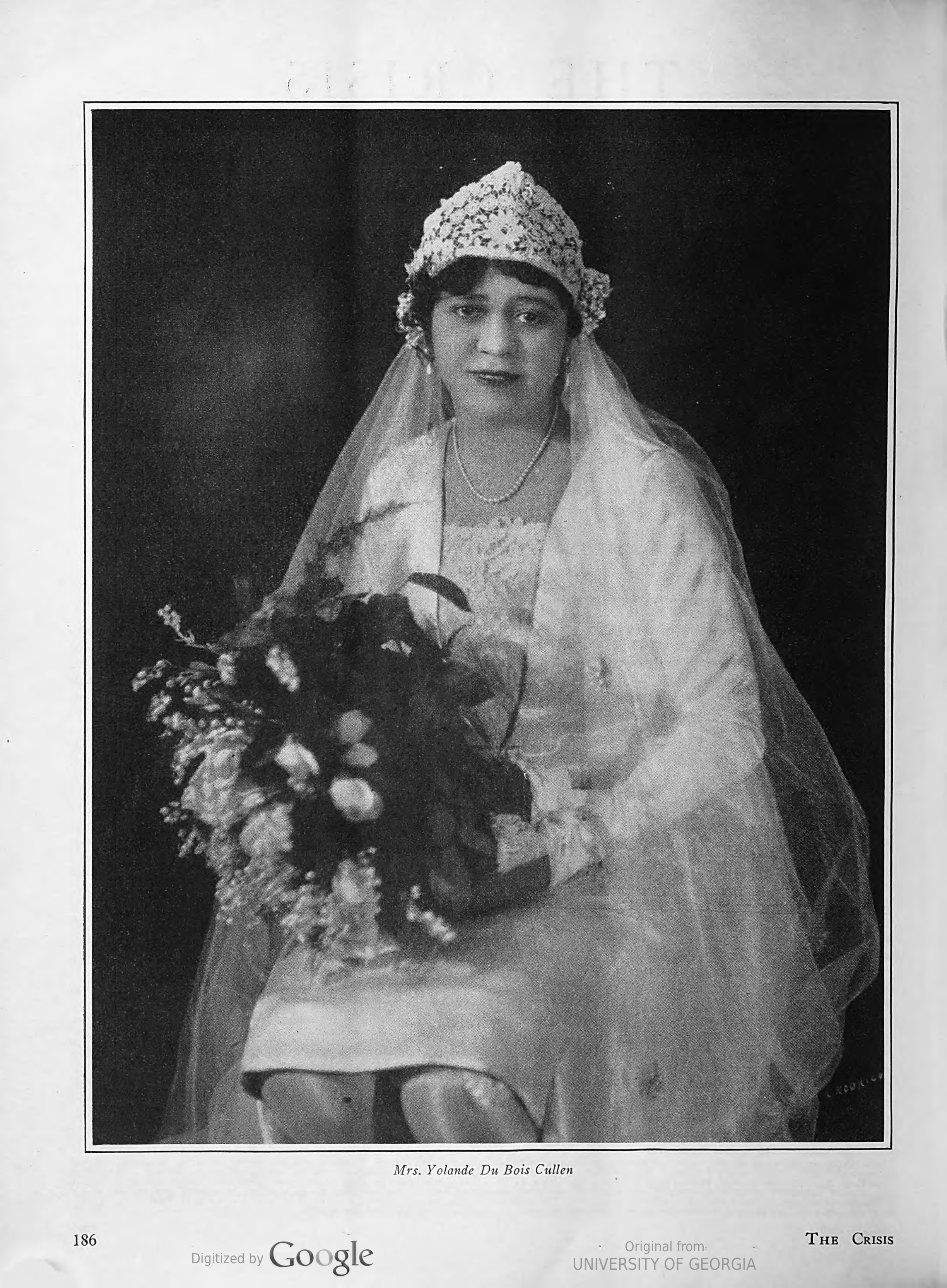
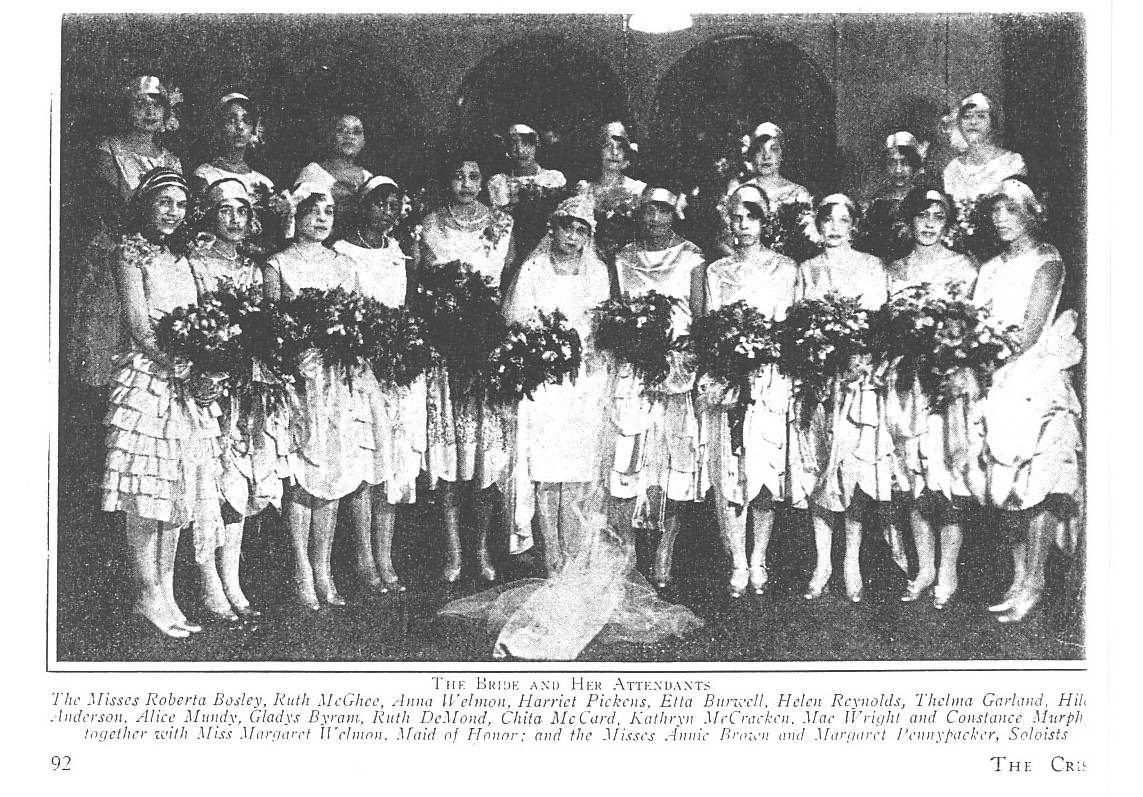
Salem Methodist Episcopal Church, with Reverend Frederick Cullen as Pastor, was the site of the Easter Monday, April 9, 1928 wedding between Yolande DuBois, daughter of WEB and Nina DuBois, and Countee Cullen, adopted of Carolyn and Reverend Cullen. The nuptials were held at night. In his first biography The Big Sea, Langston Hughes described the wedding as follows: “The Countee Cullen wedding [italics mine] was another spectacle that had Harlem talking for a long time. . .It was the social -literary event of the season and very society.”

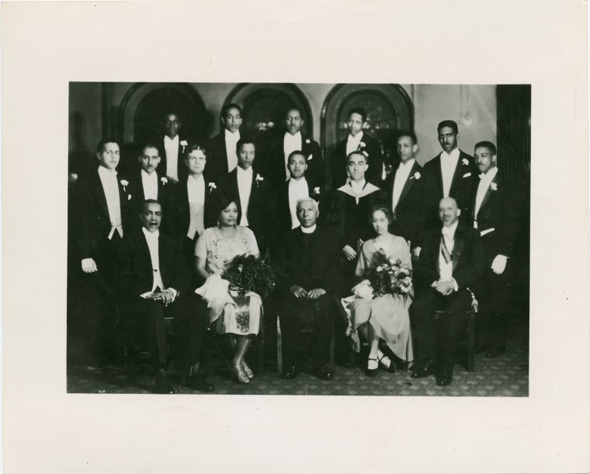
Langston Hughes and Arna Bontemps served as ushers ( see top row). Harold Jackman, to the right of Countee Cullen, was the best man. The pics are lovely but, for those in the know, the countdown to a divorce was on from the moment the couple said I do. For more detailed accounts, follow this blog. I will include material that I excluded from my publications. Some of this material will be in my biography of Harold Jackman. Also see the following resources.

RESOURCES

“Class, the Black Press, and the DuBois Cullen Wedding of 1928.” The Harlem Renaissance Revisited. Ed. Jeffrey Ogbar. Baltimore: Johns Hopkins University Press, 2010. 79-104.

“Harold Jackman.” Encyclopedia of the Harlem Renaissance. Vol. 1. Eds. Cary Wintz and Paul Finkelman. New York: Routledge, 2004.

“The Cullen-DuBois Wedding.” Encyclopedia of the Harlem Renaissance. Vol. 1. Eds. Cary Wintz and Paul Finkelman. New York: Routledge, 2004.

The Wedding

Harold at the Beaux Arts Ball 1959

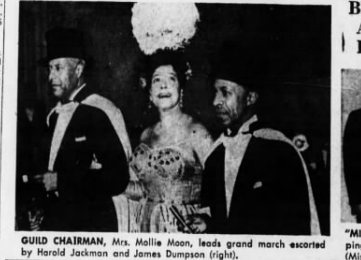
The 1959 Beaux Arts Ball was held on Friday, February 27th in the ballroom of the Concourse Plaza Hotel. The theme of the ball was Fantasy and Dreams. The annual Beaux Arts Ball was a major social event organized by the New York Guild of the National Urban League. Harold Jackman , frequently crowned King of the ball, escorted Guild’s president Mollie Moon. See Tanisha C. Ford’s biography Our Secret Society for more information about Mollie Moon. Also see Ebony’s May 1954 article on the Beaux Arts Ball.